

Agile vs Waterfall Development: Which Wins 2026
 By Ashiqur Rahman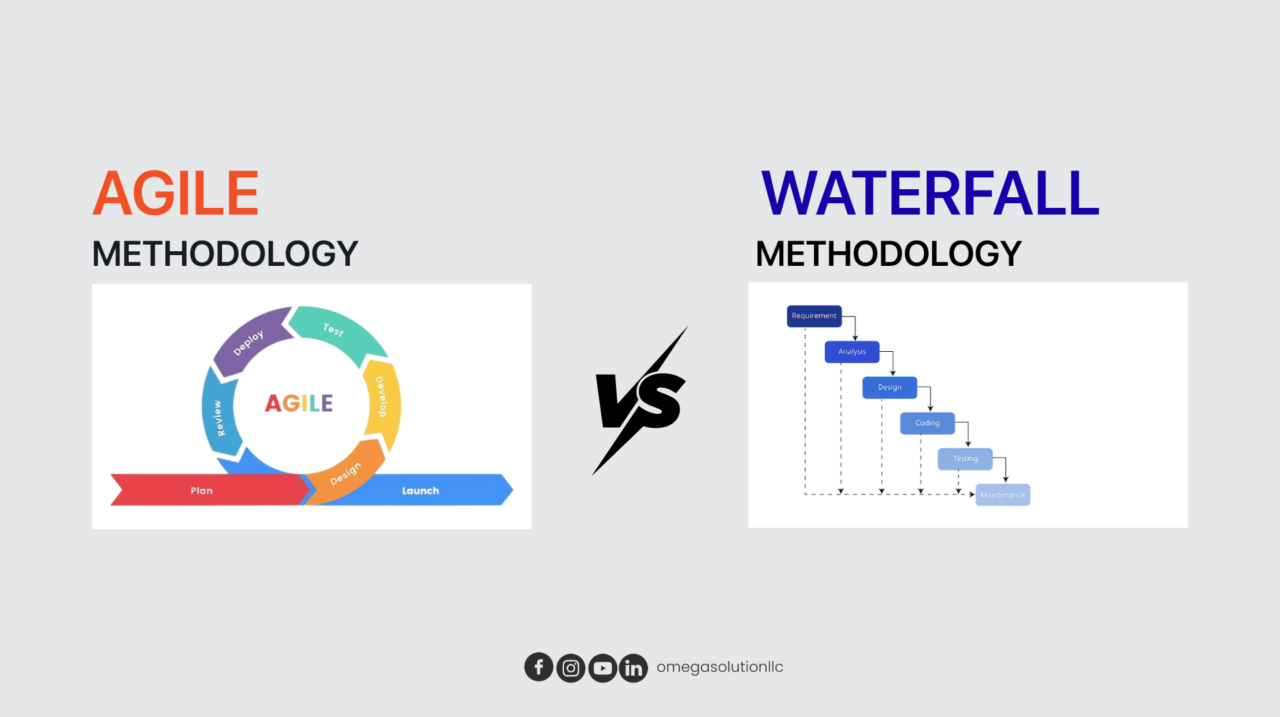
A founder once walked into a project review six months after signing off on a waterfall development plan. The product was exactly what the specification said. However, the market had moved. The feature his customers actually needed did not exist in the original specification, because nobody had known to ask for it six months earlier. As a result, the product launched on time and on budget. Yet within three months, it needed a complete rebuild.
That story is not unusual. In fact, it plays out in development teams around the world every year, and it is precisely why the debate around agile vs waterfall development still matters deeply in 2026. Choosing the wrong methodology does not just slow your project down. Ultimately, it can make the entire investment obsolete before a single user touches the product. Therefore, this guide gives you a completely honest comparison of both approaches, what they actually are, where each one wins, where each one fails, and how to make the right call for your specific project.
What Is Agile Development?
Agile development is an iterative, flexible approach to building software. Rather than defining every requirement upfront and building everything in one long cycle, agile breaks work into short development periods called sprints, typically two to four weeks each. At the end of every sprint, moreover, the team delivers a working piece of software, collects feedback, and adjusts the plan for the next sprint.
The agile approach treats software development as a living process. As a result, requirements evolve, priorities shift, and customer feedback continuously shapes the direction. Agile teams build, test, and improve in parallel, rather than waiting until a final delivery date to discover whether the product actually works.
Key agile frameworks include Scrum, Kanban, and Extreme Programming. Furthermore, agile is now the dominant methodology in modern custom software development. According to the Project Management Institute, organizations using agile methodologies report 28% more project success than those using traditional approaches. Additionally, as of 2026, agile methodologies are widely adopted, with 61% of users reporting over five years of experience, demonstrating agile’s lasting success compared to declining sequential approaches.
Consequently, Omega Solution builds every custom software development project using agile principles, because agile-built products consistently deliver more value, adapt to real business needs, and reduce the risk of building something that misses the mark entirely.
What Is Waterfall Development?
Waterfall development, on the other hand, is a linear, sequential approach to building software. Each phase, requirements, design, development, testing, and deployment, must be completed fully before the next phase begins. Therefore, nothing moves forward until the previous stage receives formal sign-off.
The waterfall model gets its name from the way work flows in one direction, downward, like water over a waterfall. Once a phase completes, the team does not go back. Requirements defined at the start remain fixed throughout the entire project lifecycle.
This structure works well when requirements are completely clear, fixed, and unlikely to change. However, in most software projects, particularly custom business platforms, requirements evolve as the product takes shape. Consequently, the waterfall model’s rigidity becomes its biggest liability in fast-moving markets. In fact, according to surveys, 71% of companies now choose agile while waterfall is used by only 51% of organizations, a gap that continues to widen each year as software complexity increases.
The Difference Between Agile vs Waterfall Development
The single most important difference between agile and waterfall development is not speed, cost, or team size. Instead, it is how each methodology handles change.
Agile welcomes change at every stage. Waterfall, by contrast, resists it by design.
In agile development, therefore, a new customer insight discovered in month three can reshape the product roadmap by month four. And in waterfall development, however, that same insight means either accepting a product that misses the mark or paying significant rework costs to rebuild completed phases.
In 2026, moreover, markets move too fast for rigid plans. Customer expectations shift. Competitors launch new features. Technologies evolve rapidly. As a result, a methodology that cannot adapt to change consistently delivers yesterday’s solution to tomorrow’s problem.
Agile vs Waterfall Development: 8 Key Factors Compared
1. Flexibility: Adapt Continuously or Stay Fixed
Agile builds flexibility into every sprint. Therefore, requirements can change between cycles without breaking the entire project structure. Teams respond to new information, customer feedback, and market shifts at any point in the development lifecycle.
Waterfall, however, fixes requirements at the start. Consequently, any change after the planning phase triggers a formal change request process, which adds cost, time, and complexity. Furthermore, the further into the project a change occurs, the more expensive it becomes to implement.
Verdict: Agile wins on flexibility. Waterfall works only when requirements are genuinely fixed from day one.
2. Speed to Value: When Does the Client See Results?
Agile delivers working software at the end of every sprint, typically every two to four weeks. As a result, clients see real progress continuously, test actual features early, and provide feedback that shapes the next development cycle.
Waterfall, on the other hand, delivers working software only at the end of the entire project. Therefore, clients wait months, sometimes over a year, before seeing anything functional. Furthermore, by the time the product arrives, the original requirements may no longer reflect current business needs or market conditions.
Verdict: Agile wins on speed to value. Waterfall delays feedback until it is often too late to act on it effectively.
3. Risk Management: Where Do Problems Surface?
Agile surfaces problems early. Because teams build, test, and review in short cycles, issues come to light within days or weeks, when they are consequently cheap and fast to fix.
Waterfall, however, surfaces problems late. Testing happens near the end of the project, after months of development. As a result, fixing a fundamental design problem discovered in the testing phase can cost as much as rebuilding entire sections of the product. Moreover, by that point, the timeline impact is severe and often unrecoverable within the original budget.
Verdict: Agile wins decisively on risk management. Early discovery of problems is always cheaper than late discovery.
4. Cost Predictability: Fixed Budget vs Managed Investment
Waterfall offers more predictable upfront cost estimates because the scope is defined entirely at the start. Therefore, for clients who need a fixed budget before approving a project, the waterfall’s structure provides that certainty, at least initially.
Agile, however, estimates cost differently. Because the scope evolves through sprints, the total cost of an agile project is harder to predict precisely at the outset. Nevertheless, agile also prevents the most expensive waterfall outcome, building the wrong product entirely and discovering the mistake only at launch. Moreover, agile’s iterative delivery means clients can stop at any sprint if priorities change or budgets shift, without consequently losing the entire investment made so far.
Verdict: Waterfall wins on upfront cost predictability. Agile wins on total cost efficiency and investment protection.
5. Client Involvement: Passive Approval vs Active Collaboration
Waterfall requires heavy client involvement at the start, detailed requirements gathering, specification sign-off, and design document approvals. After that, however, the client typically waits until testing or final delivery to see the product again.
Agile, in contrast, requires consistent client involvement throughout the entire project. Sprint reviews happen every two to four weeks. As a result, clients see working software regularly, provide direct feedback, and actively shape the product as it develops. Furthermore, this ongoing collaboration consistently produces outcomes that better match real business needs than a specification written months earlier.
Verdict: Agile wins on client collaboration and outcome alignment. Waterfall suits clients who want to define requirements once and step back.
6. Documentation: Comprehensive Records vs Working Software
Waterfall produces extensive documentation at every phase, including requirements documents, design specifications, test plans, and deployment guides. As a result, this documentation provides a clear audit trail and supports regulatory compliance in industries like healthcare, finance, and government.
Agile, however, prioritizes working software over comprehensive documentation. While agile teams still document their work, the emphasis is on delivering functional features rather than maintaining exhaustive records. Consequently, agile can create documentation gaps that complicate onboarding new team members or satisfying compliance audits.
Verdict: Waterfall wins on documentation and compliance support. Agile wins on delivery speed and practical outcomes.
7. Team Structure: Specialists vs Cross-Functional Collaboration
Waterfall organizes work by specialist phase. Therefore, designers design, then developers build, then testers test, each group working in relative isolation from the others throughout the project.
Agile, on the other hand, requires cross-functional teams where designers, developers, testers, and product owners collaborate continuously throughout every sprint. As a result, this collaboration produces faster decisions, fewer handoff delays, and more cohesive products. Furthermore, team members build a shared understanding of the product that carries through every development cycle.
Verdict: Agile wins on team collaboration and communication efficiency. Waterfall suits environments where specialist teams operate in sequential phases.
8. Scalability: Growing Projects and Larger Teams
Agile works exceptionally well for small to mid-sized teams working on clearly scoped sprints. However, scaling agile across large organizations with multiple teams requires additional frameworks like SAFe and demands strong coordination discipline as a result.
Waterfall, however, scales more naturally for very large projects with fixed scope, particularly infrastructure builds, hardware deployments, or large government contracts where every phase requires formal sign-off before proceeding. Therefore, neither methodology is universally superior; the right choice depends entirely on project scale and structure.
Verdict: Agile wins for most software development at startup and mid-market scale. Waterfall, however, has clear advantages in large, fixed-scope enterprise or infrastructure projects.
Side-by-Side Comparison Table
| Factor | Agile | Waterfall |
| Flexibility | ✅ High: adapts every sprint | ❌ Low, fixed at start |
| Speed to Value | ✅ Fast: working software every 2–4 weeks | ❌ Slow delivery only at the end |
| Risk Management | ✅ Issues surface early | ❌ Issues surface late |
| Cost Predictability | ❌ Harder to estimate upfront | ✅ Fixed budget easier to define |
| Client Involvement | ✅ Continuous collaboration | ❌ Heavy at start, minimal after |
| Documentation | ❌ Lighter | ✅ Comprehensive |
| Team Collaboration | ✅ Cross-functional and continuous | ❌ Specialist and sequential |
| Change Management | ✅ Built in at every stage | ❌ Expensive and disruptive |
| Best For | Dynamic, evolving software projects | Fixed-scope, compliance-heavy projects |
When Agile Development Is the Right Choice
Agile development wins in the following situations. Moreover, these scenarios cover the majority of custom software projects in 2026.
Your Requirements Will Evolve
If you are building a customer-facing product, a SaaS platform, or any software that depends on user feedback to reach its best form, then agile is the only methodology that lets you incorporate that feedback before the final delivery. In fact, most businesses discover their real requirements by using early versions of the product, not by writing specification documents before a single line of code exists.
You Need to Reach the Market Faster
Agile’s sprint-based delivery means you can launch a working version of your product in weeks, gather real user data, and improve iteratively. Consequently, you reach the market faster and with less upfront risk than waterfall’s all-or-nothing delivery model allows.
Your Market Moves Quickly
In competitive industries, such as fintech, e-commerce, logistics technology, and AI-powered platforms, market conditions change faster than waterfall timelines allow. Therefore, agile keeps your product competitive by building adaptability into the development process itself. Furthermore, the ability to pivot between sprints based on competitor activity or user feedback is a genuine business advantage that waterfall simply cannot provide.
You Are Validating a New Product Idea
For businesses validating a new product idea, agile is the natural fit. Omega Solution’s MVP Development service uses agile sprint cycles to deliver testable, functional products in the shortest possible time, consequently letting founders validate market fit before committing to a full-scale build.
When Waterfall Development Is the Right Choice
Waterfall development wins in specific situations. Therefore, it is important to understand these scenarios clearly before dismissing the methodology entirely.
Your Requirements Are Completely Fixed
If your project has a fully defined, unchanging specification, a government contract with legally binding deliverables, a hardware integration with fixed technical requirements, or a regulated compliance system where scope cannot deviate, then waterfall’s structured phases provide the control and documentation these environments demand.
Regulatory Compliance Is a Core Requirement
Industries like healthcare, finance, and government often require formal documentation at every development phase for audit and compliance purposes. As a result, waterfall’s comprehensive documentation at each stage supports these requirements in ways that agile’s lighter documentation model does not consistently meet.
You Need Precise Upfront Cost Certainty
Some organizations require a fixed, guaranteed cost before approving a project. Therefore, the waterfall’s fully defined scope at the start supports budget certainty better than agile’s evolving sprint model. However, it is worth considering whether that certainty justifies the flexibility you give up in exchange.
The Hybrid Approach: Getting the Best of Both Methods
In 2026, moreover, the most sophisticated development teams do not treat agile vs waterfall development as a binary choice. Instead, they combine both approaches in a hybrid model that captures the planning discipline of the waterfall and the delivery flexibility of agile.
A common hybrid pattern works as follows: use the waterfall’s structured approach for the initial discovery, architecture planning, and compliance documentation phase, then switch to agile sprint cycles for all development, testing, and iteration work. As a result, clients get cost certainty at the project start and delivery flexibility throughout execution.
This hybrid model is precisely how Omega Solution structures complex custom software development projects, delivering the predictability clients need for budget approval alongside the flexibility that produces better software outcomes. Furthermore, for businesses planning a complex platform and unsure which approach fits their project, Omega Solution’s IT Consultation service provides honest, methodology-neutral guidance before any development commitment.
How Omega Solution Uses Agile to Deliver Real Results
Omega Solution’s engineering team uses agile development across all custom software projects. Therefore, every client engagement runs in defined sprint cycles, with working software delivered and reviewed at each milestone.
This approach has produced measurable results across the project portfolio. The Smart WMS project for Smart Factory Worx in Singapore, a complex warehouse management system integrating robotics, IoT sensors, and predictive inventory logic, delivered a 2,589% improvement in inbound efficiency. The agile sprint model, moreover, meant requirements were refined continuously as the system took shape, producing a platform precisely fitted to the client’s actual operational needs rather than a theoretical specification.
Similarly, the Coinex Crypto project delivered a full crypto exchange platform in six months, a timeline only achievable through agile’s continuous delivery model. Furthermore, the Fulfillment By People platform processed 500,000 orders with 98% client satisfaction, built through iterative sprint cycles that refined logistics logic at every stage.
As a result, on Upwork and Clutch, Omega Solution maintains a 5.0 rating across all client reviews, a direct reflection of the collaborative, transparent agile process that keeps clients informed and aligned throughout every project.
How to Choose Between Agile vs Waterfall Development for Your Project
Before committing to either methodology, therefore, answer these five questions honestly.
Do your requirements have a realistic chance of changing? If yes, choose agile. If not, a waterfall is viable.
Does your project need to reach the market or generate value before full completion? If yes, consequently choose agile. If not, waterfall suits a full-build delivery model.
Will your users provide feedback that should shape the final product? If yes, choose agile. Waterfall does not accommodate this feedback until after launch, by which point changes are significantly more expensive.
Does your industry require formal documentation at every development phase? If yes, waterfall or a hybrid approach. Agile alone may not meet compliance requirements in regulated sectors.
Is your budget fixed and non-negotiable before a single line of code is written? If yes, waterfall gives more upfront certainty. However, consider whether that certainty is worth the delivery flexibility you sacrifice as a result.
For most custom software projects in 2026, moreover, the honest answer to questions one, two, and three is yes, which means agile wins for the majority of businesses building custom platforms today. To understand furthermore how methodology choice affects your overall development investment, read the complete guide: Custom Software Development Cost Breakdown 2026.
FAQs About Agile vs Waterfall Development
What is the main difference between agile and waterfall development?
The main difference between agile vs waterfall development is how each handles change. Agile builds change into every sprint cycle, therefore allowing requirements to evolve throughout the project. Waterfall, however, fixes requirements at the start and resists change once development begins. This fundamental difference determines which methodology fits a given project better than any other single factor.
Is agile always better than waterfall?
No. Agile wins for most custom software projects because requirements typically evolve as the product takes shape. However, waterfall remains the right choice for projects with completely fixed requirements, strict regulatory documentation needs, or legally binding scope commitments. Moreover, a hybrid approach often delivers the best of both methodologies for complex enterprise projects.
Which methodology costs less, agile or waterfall?
Waterfall provides more predictable upfront cost estimates. However, agile typically delivers better total cost efficiency because problems surface early, when they are consequently cheap to fix, rather than late, when they require expensive rework. Furthermore, the most costly outcome in software development is building the wrong product entirely, which the waterfall model’s delayed feedback loop makes significantly more likely.
How long does an agile sprint last?
Most agile sprints run for two to four weeks. Each sprint delivers a defined, working piece of functionality. Furthermore, sprint length depends on team size, project complexity, and the pace of client feedback cycles throughout the engagement.
Does Omega Solution use agile or waterfall development?
Omega Solution uses agile development for all custom software projects, with structured discovery phases that provide the planning clarity clients need before sprints begin. This hybrid approach, therefore, combines the budget predictability of waterfall planning with the delivery flexibility and risk management of agile execution.
How does methodology choice affect custom software development cost?
Methodology choice directly affects both timeline and total cost. Agile’s early risk detection consequently prevents expensive late-stage rework. Waterfall’s fixed-scope structure provides upfront cost certainty but increases the risk of costly changes later. Therefore, for a full breakdown of how cost and methodology interact, read the custom software development cost guide.
Conclusion: Agile vs Waterfall Development in 2026
The agile vs waterfall development debate has a clear answer for most software projects in 2026: Agile wins. Not because waterfall is wrong, but because most software projects involve evolving requirements, user feedback that shapes the final product, and markets that change faster than fixed plans allow.
Waterfall, however, remains the right choice for a specific category of projects, fixed-scope government contracts, hardware integrations, compliance-heavy regulated systems, and initiatives where every phase requires formal sign-off before proceeding. Therefore, for these situations, the waterfall’s structure is a genuine advantage, not a limitation.
For everything else, custom business platforms, SaaS products, AI-powered applications, e-commerce solutions, and logistics systems, Agile’s iterative model consistently delivers better products, earlier value, and lower total risk. Moreover, the methodology question is only one part of the decision. The partner who executes the methodology matters just as much as the methodology itself. Therefore, read the complete guide on how to choose the right custom software development partner before committing to any development engagement.
Ready to build with a team that combines agile delivery with enterprise-grade quality? Explore Omega Solution’s custom software services or contact the team for a free consultation today.


 Aug 26, 2025


 Dhaka, Bangladesh

