

How to Validate Your Startup Idea Before Building
 By Ashiqur Rahman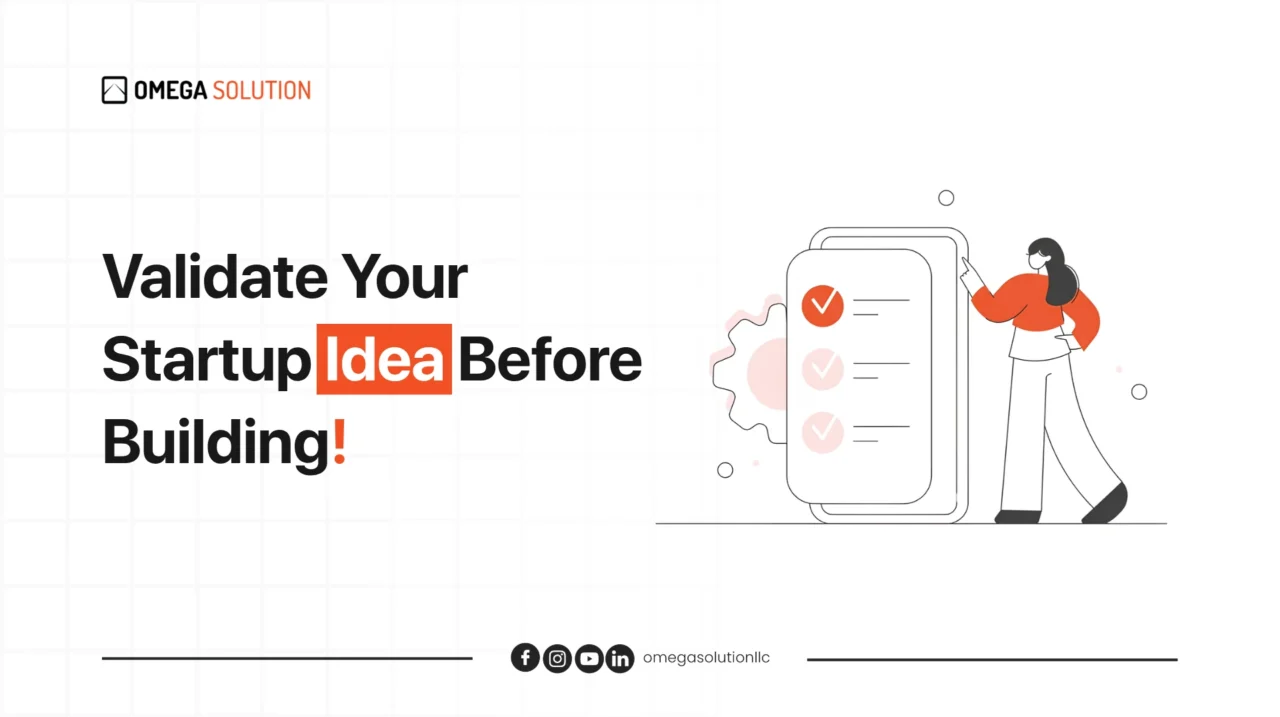
A founder once spent eight months building a fitness app. He was convinced people wanted it. His friends loved the idea. His family said it was brilliant. However, when he launched, almost nobody downloaded it. Not because the app was broken, it worked perfectly. The problem was simple and painful. He had never spoken to a single stranger who matched his target customer before writing a line of code. He validated his idea with people who loved him, not with people who would pay him. That mistake cost him eight months and $60,000. Furthermore, it cost him the opportunity to build something people actually needed. Therefore, learning how to validate your startup idea before building is not optional in 2026. It is the single most important thing you do before committing any real resources. The average failed startup burns through $35,000 before the founder realizes nobody wants what they are building. This guide shows you exactly how to avoid that outcome.
Why You Must Validate Your Startup Idea in 2026
According to CB Insights, the number one reason startups fail is a lack of market need. This accounts for 42 percent of all startup failures. Not funding issues, not team problems, not competition. Simply building something nobody wants to buy.
Furthermore, in 2026, AI tools will have compressed the research validation phase from months to hours. Therefore, there is no excuse for skipping validation. The tools exist. The frameworks are proven. The only barrier is the psychological discomfort of discovering your idea might be wrong.
However, that discomfort is exactly the point. Your idea is a hypothesis, not a fact. Your job is to prove or disprove it quickly. Consequently, the founders who validate their startup idea early consistently build better products. They spend less on getting to market. They attract investors far more easily than those who skip this step.
Before building anything, make sure you understand what an MVP product is and how it fits into the validation process. Read: What is an MVP product and why it matters.
What Validating a Startup Idea Actually Means
Many founders confuse validation with getting positive feedback. However, these are completely different things. Getting your friends to say great ideas is not validation. It is encouragement.
Real validation answers one specific question: Will strangers pay real money to solve this problem with your solution? Furthermore, validation breaks into three distinct pillars: desirability, feasibility, and viability.
Pillar 1: Desirability
Desirability answers: Do people actually want this? Not just say they want it, but demonstrate it through behavior. Therefore, desirability validation requires talking to real potential customers. Not friends. Not family. Strangers who match your target profile precisely.
Pillar 2: Feasibility
Feasibility answers: Can you actually build and deliver this with your current resources? Furthermore, for AI-powered startups in 2026, you must validate the technology hypothesis alongside the product hypothesis. Specifically, you need to confirm whether the AI can deliver sufficient quality for the core use case. A great idea built on technology that cannot perform as needed is not a viable startup.
Pillar 3: Viability
Viability answers: Will this make money? Specifically, will customers pay enough, often enough, to build a sustainable business? Founders who rush the desirability step and skip viability consistently regret it most. A product people love but will not pay for is a hobby, not a business.
Step 1: Define Your Core Assumption First
Before you talk to anyone or test anything, identify the single most important assumption your idea depends on. This is the assumption that, if proven wrong, means the entire idea fails.
Before you validate your solution, you must validate the problem. A common failure mode is building a brilliant solution to a problem nobody cares about. Therefore, write your core assumption in one sentence. For example, Small restaurant owners spend more than five hours per week on inventory management and would pay to automate it.
Why This Step Cannot Be Skipped
Every validation activity you run should test this assumption directly. Furthermore, every feature you consider building should trace back to it. As a result, you avoid the most expensive validation mistake, testing the wrong thing with precision.
If you need expert help defining your core assumption before validation begins, Omega Solution’s IT Consultation service provides CTO-level strategic guidance without hiring full-time.

Step 2: Talk to Real Potential Customers
Talking only to friends and family tops the list of validation mistakes. They lie to spare feelings. Therefore, find strangers who match your ideal customer profile. Use LinkedIn, Reddit communities, industry forums, and professional networks to reach them.
How to Run Customer Discovery Interviews
Aim for 15 to 30 conversations with strangers in your target segment. Patterns usually emerge after 8 to 10 interviews. More interviews add confidence, especially for B2B ideas.
Furthermore, ask the right questions. Do not pitch your solution during discovery interviews. Instead, ask about their current reality.
Questions That Reveal Real Pain
Use these questions in every customer discovery conversation. First, ask: Walk me through how you currently handle this problem. Second, ask: How much time does this take each week? Third, ask: What have you tried before to solve it? Fourth, ask: What would it mean for your business if this were solved automatically?
Moreover, avoid leading questions. Stick to open-ended formats. The answers reveal whether the pain is real or whether you are the only person who cares about it.
What Strong Pain Signals Look Like
Strong pain signals are specific. The person remembers exact situations where the problem cost them time or money. They have already tried to solve it through workarounds, tools, or hiring. Furthermore, they interrupt you to share examples before you finish asking the question. These signals confirm the problem is real. Consequently, they justify moving to the next validation step.
Step 3: Test Demand With a Landing Page
After 15 to 20 customer interviews confirm the pain is real, test whether people take action, not just express interest. Create a simple landing page describing your solution. Drive traffic with a small ad spend of $200 to $500. Measure sign-ups or pre-orders, not just visits.
What a Validation Landing Page Needs
A strong validation landing page has five components. First, a clear headline stating the specific problem you solve. Second, three bullet points explaining the core benefit, not features. Third, a single call to action, sign up, join the waitlist, or pre-order. Fourth, a price or pricing indication to filter serious interest from casual curiosity. Fifth, zero mention of the technology or development stack.
Furthermore, the goal is a clear signal, not a beautiful design. Consequently, a basic page built in one hour serves this purpose just as well as a professionally designed site.
How to Read the Results
A conversion rate of 15 percent or above on a targeted landing page is a strong positive signal. Below 3 percent suggests the message, the market, or the idea itself needs significant rethinking.
However, conversion rate alone is not enough. Furthermore, look at the quality of sign-ups. Are they from your target segment? Do they respond to follow-up emails? These qualitative signals matter as much as the numbers.
Step 4: Pre-Sell Before You Build
This is the most powerful validation step, and the one most founders skip because it feels uncomfortable. Ask customers to pay before you build. Successful pre-sales prove real demand better than any other signal.
Furthermore, for B2B or high-ticket B2C startups, the ultimate validation signal is a letter of intent or a paid pilot. If you cannot get a yes on a prototype, you will not get a yes on the finished product.
How to Pre-Sell a Software Product
Pre-selling does not require the product to exist. Therefore, use a combination of three things. First, a clear description of what the product will do and what problem it solves. Second, a timeline for when the beta version will be available. Third, a discounted early adopter price that expires.
Moreover, Stripe checkout pages or Gumroad work perfectly for collecting pre-sale payments. Consequently, when someone pays, even a small amount, you have genuine proof of demand. This is more valuable to investors than any pitch deck.
Step 5: Analyze the Competitive Landscape Honestly
If competitors exist, that validates market demand. Identify gaps in their offerings that you can fill. However, many founders make the opposite mistake; they see competitors and assume the market is too crowded. This is rarely the right conclusion.
Furthermore, no competition is often a far worse signal than strong competition. No competition typically means one of three things. First, nobody has found a way to monetize the problem. Second, the market is too small to attract investment. Third, the problem is not painful enough for people to pay to solve it.
What to Look for in Competitor Research
Study competitors across five dimensions. First, what features do they offer, and what are users complaining about in reviews? Second, what is their pricing model? Third, who do they target, and who do they ignore? Fourth, what do their negative reviews consistently mention? Fifth, where do their customers go when they leave?
As a result of this analysis, you will find the specific gap your startup can fill. Moreover, you will understand the exact words your customers use to describe their pain, which directly improves every piece of messaging you write.
Step 6: Score Your Idea Objectively
After running customer interviews, a landing page test, and competitor research, score your idea against clear criteria. Your goal is to find every reason it might fail, then decide if you can overcome those reasons.
Use this scoring framework before deciding whether to build.
| Signal | Strong Go | Conditional | No Go |
| Customer interviews | 70%+ confirm severe pain | 40–70% confirm pain | Under 40% |
| Landing page conversion | 15%+ sign-up rate | 5–15% | Under 5% |
| Pre-sales | 3+ paying customers | 1–2 paying customers | Zero |
| Competition | Clear gap identified | Crowded, but a gap exists | No gap found |
| Willingness to pay | Budget matches price | Uncertain | Refuses to discuss price |
| Product-market fit signal | 40%+ say very disappointed without it | 20–40% | Under 20% |
Furthermore, if all signals are positive, build immediately. If signals are mixed, address the specific gaps before investing heavily. If signals consistently point to no go, move on. You just saved yourself $35,000 and 8 months. That is a win.
Step 7: Build the Minimum Feature Set Only
Once validation confirms real demand, the next step is defining what to build first. This is where most validated ideas go wrong. Founders treat validation as permission to build everything they imagined. However, validation is permission to build only the minimum feature set that tests the core assumption at scale.
Therefore, list every feature you want the product to have. Then cut everything that does not directly serve the validated core pain.
Why Minimum Feature Set Thinking Saves Budgets
Testing what people actually do beats asking what they might do. Building something people can touch and use gets you the most honest feedback. Furthermore, every extra feature you add before validation is a feature you built on an assumption, not evidence.
Consequently, your development budget goes toward features users actually need, not features that felt important during planning.
Using AI to Accelerate Startup Idea Validation in 2026
AI tools have transformed how fast founders can validate startup ideas. In 2026, AI handles market sizing, competitive landscape analysis, and customer persona modeling automatically. Furthermore, initial AI-powered validation can cost as little as a few hundred dollars in compute time, a dramatic reduction from previous manual research costs.
However, AI cannot replace human customer interviews. It cannot tell you whether real customers will pay. Therefore, use AI for research and humans for relationship-based validation signals. The combination consistently produces better outcomes than either approach alone.
Quick Validation Checklist, Before You Build
Use this checklist before committing any development budget.
- Core assumption written in one sentence
- 15 to 30 customer interviews with strangers completed
- Landing page live with $200 to $500 ad spend running
- Conversion rate above 15 percent confirmed
- At least 3 pre-sales or letters of intent collected
- Competitive gap clearly identified
- Scoring framework completed with honest assessment
- MVP feature set defined, not full product feature list
- Development partner selected based on portfolio evidence
- Post-launch feedback mechanism planned
Common Mistakes When You Validate a Startup Idea
Understanding how to validate your startup idea also means understanding where most founders go wrong. These mistakes consistently destroy validation efforts, even when the underlying idea is strong.
Mistake 1: Validating With People Who Like You
Friends and family almost always say your idea is good. Their feedback feels validating. However, it is completely useless for predicting whether strangers will pay. Therefore, always seek feedback from people who have no emotional investment in making you feel good.
Mistake 2: Asking the Wrong Questions
Asking, would you use this? produces optimistic answers. Furthermore, asking would you pay for this? still overestimates real demand. The only reliable question is: Can I take your payment today for early access? The answer to that question does not lie.
Mistake 3: Ignoring Negative Signals
Confirmation bias is the enemy of good validation. If the data says no go, listen to it, even if your gut says otherwise. Moreover, founders who ignore negative signals during validation consistently face the same signal at launch, except by then, the budget is gone.
Mistake 4: Skipping Validation Entirely
Validation feels slow when you are excited to build. However, every hour spent understanding your customers now saves weeks of building the wrong thing later. Furthermore, skipping validation is the most expensive time-saving decision a founder can make.
For a complete guide on all the mistakes that derail software projects, including rushed validation, read: 10 software development mistakes to avoid in 2026.
How Long Does It Take to Validate a Startup Idea in 2026?
A complete validation process takes approximately 4 to 8 weeks in 2026. Furthermore, the human validation elements, customer interviews, pre-selling, and smoke testing still require several additional weeks of real-world contact.
| Week | Activity | Goal |
| Week 1 | Define core assumption + identify target segment | Clarity before action |
| Week 2 | Run 15–20 customer discovery interviews | Confirm real pain exists |
| Week 3 | Build and launch a landing page with ad spend | Test message and demand |
| Week 4 | Attempt pre-sales with 5–10 ideal customers | Confirm willingness to pay |
| Week 5–6 | Competitor analysis and scoring | Identify market gap |
| Week 7–8 | Define MVP feature set | Prepare for development |
Consequently, by week 8, you have real evidence, not assumptions, to base your development decision on. Moreover, you have early customer relationships that become your first beta users, first case studies, and first referrals.
When to Build After Validation, And Who to Build With
Once validation confirms real demand, the next critical decision is who builds your MVP. This decision determines whether validation leads to a successful product or a technically functional product nobody uses.
Therefore, choose a development partner who participates in the product strategy conversation, not just the technical execution. The best MVP development partners use your validation data to define the minimum feature set, architect for scale, and deliver working software every two weeks.
For a complete guide to evaluating development partners, read “How to choose the right custom software development partner.” Furthermore, to understand what the MVP build process looks like after validation is complete, read: Best MVP development company in 2026.
How Omega Solution Supports Post-Validation Builds
Omega Solution’s MVP Development service starts every engagement with a structured discovery sprint. This reviews your validation data, defines the minimum feature set based on confirmed user pain, and produces a transparent roadmap before development begins.
Furthermore, agile sprint delivery means working software arrives every two weeks, so you continue collecting real user feedback from the moment the first version launches. As a result, the product improves continuously based on evidence rather than assumptions.
Additionally, for businesses considering whether custom software or an off-the-shelf platform better serves their validated idea, read: custom software vs off-the-shelf solutions.
FAQs
How do you validate a startup idea before building?
Validating a startup idea before building requires six steps. First, define your core assumption. Second, conduct 15 to 30 customer discovery interviews with strangers who match your target profile. Third, build a landing page and test message-market fit with small ad spend. Fourth, attempt pre-sales to confirm willingness to pay. Fifth, analyze the competitive landscape for gaps. Sixth, score all signals objectively before committing to development.
How long does it take to validate a startup idea?
A thorough validation process takes 4 to 8 weeks in 2026. AI tools compress the research-intensive phases significantly. However, customer interviews, pre-sales, and landing page tests still require real-world time. Consequently, rushing validation below 4 weeks typically produces insufficient signal to make a confident build decision.
How much does it cost to validate a startup idea?
Validating a startup idea can cost as little as a few hundred dollars when AI tools handle research, and free platforms support landing page testing. Furthermore, $200 to $500 in targeted ad spend provides enough traffic to measure landing page conversion meaningfully. Therefore, total validation costs rarely exceed $1,000 when approached systematically.
What is the most important signal when validating a startup idea?
Pre-sales are the most important validation signal. When strangers pay real money for a product that does not exist yet, they confirm both the pain and the willingness to pay simultaneously. Furthermore, pre-sale customers become your first beta users, providing the post-launch feedback that shapes the next development cycle.
What if validation shows my startup idea is wrong?
If validation fails, do not be discouraged. You just saved yourself 6 to 12 months. Pivot the idea or move on to the next one. This is a win, not a loss. Furthermore, the insights from failed validation almost always reveal an adjacent opportunity that is stronger than the original idea.
How does Omega Solution help after startup idea validation?
Omega Solution reviews your validation data during the initial discovery sprint. It defines the minimum feature set based on confirmed user pain. Furthermore, agile sprint delivery means working software arrives every two weeks, so validation continues after launch through real user behavior rather than stopping at the pre-build stage.
Conclusion: Validate Your Startup Idea Before It Validates You
The founders who succeed in 2026 share one habit. They treat their startup idea as a hypothesis, not a fact. They design experiments to disprove it before committing their time and money to building it. Consequently, they reach real users faster, spend less getting there, and build products that people actually pay for.
Furthermore, validation is not a one-time event. The best product teams validate continuously, before building, during building, and after launching. Every sprint, every release, and every customer conversation is an opportunity to test another assumption.
Therefore, before you build anything, run the six validation steps in this guide. Talk to real strangers. Build a landing page. Attempt a pre-sale. Score your signals honestly. Then build only what the evidence supports, starting with the minimum feature set that tests your core assumption at scale.
Moreover, once validation confirms your idea is worth building, the next critical decision is what to include in your first version. Explore Omega Solution’s MVP Development service to discover how validated ideas become scalable products in weeks, not months. Additionally, read What is an MVP product to understand exactly what you should build first.
Ready to build your validated idea? Contact Omega Solution today for a free 15-minute consultation.


 Aug 26, 2025


 Dhaka, Bangladesh

