

AI Automation vs Rule Based: Which Wins in 2026
 By Ashiqur Rahman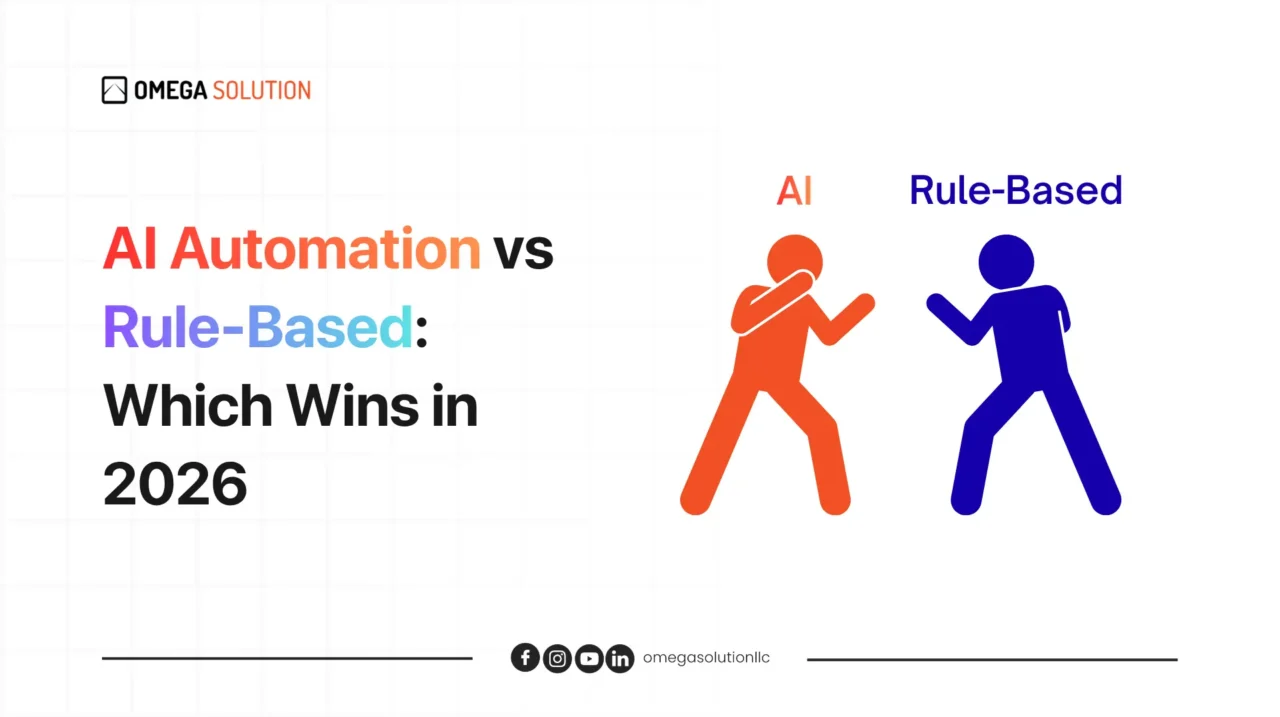
AI Automation vs Rule-Based: Which Approach Wins in 2026?
You have a workflow that needs automating. Your developer suggests two completely different approaches, and both sound reasonable. One option uses simple if-then logic that triggers an action whenever a specific condition is met. The other uses an AI model that reads the input, understands the context, and decides what to do. Furthermore, the AI option costs more, takes longer to build, and sounds more impressive in a meeting. However, more impressive does not always mean more appropriate. Choosing the wrong approach does not just waste budget; it produces automation that breaks unpredictably, frustrates users, or simply does not deliver the reliability your business actually needs. In 2026, many companies are implementing AI without proper consideration due to hype, even when it is not the optimal solution. Therefore, the AI automation vs rule-based decision is one of the most consequential technical choices a business makes in 2026, and getting it right requires understanding what each approach actually does, where each one wins, and how to combine them when neither alone is the complete answer. This guide gives you that understanding.
What Is Rule-Based Automation?
Rule-based automation follows explicit instructions. When a defined condition is met, a specific action occurs. This type of automation is reliable, predictable, and easy to audit.
Furthermore, rule-based automation is deterministic; for identical inputs, these systems consistently produce the same outputs. This is crucial in areas such as accounting, payroll, and inventory management, where the tolerance for errors is minimal, and auditability is essential.
Rule-based automation includes traditional Robotic Process Automation, scheduled scripts, workflow triggers, and if-then logic chains. Rule-based automation follows fixed, if-then instructions for repetitive tasks. It excels at structured, predictable processes where the inputs and required responses do not change.
For a broader understanding of how AI automation fits into overall business automation strategy, read: AI in business automation — complete guide 2026.
What Is AI Automation?
Instead of relying only on fixed rules, AI systems analyse data, recognise patterns, and adjust behaviour over time. This allows automation to handle variability, ambiguity, and evolving inputs that rule-based systems struggle with.
Furthermore, artificial intelligence identifies patterns and makes decisions based on probabilities. An AI system can analyse unstructured data, emails, free-text documents, and audio recordings, and evaluate trends to predict future outcomes.
AI automation covers machine learning models, natural language processing, computer vision, and increasingly, autonomous AI agents that plan and execute multi-step tasks. The agentic AI market was valued at $7.8 billion in 2025 and is projected to exceed $52 billion by 2030. Gartner expects 40% of enterprise applications to embed AI agents by the end of 2026, up from less than 5% just a year earlier.
Omega Solution’s AI and Automation service builds both rule-based and AI-powered automation, selecting the right approach for each specific workflow rather than defaulting to whichever technology is currently trending.

The Core Difference: Predictability vs Adaptability
Rule-based automation operates based on predefined conditions and logic, producing consistent and predictable results. AI automation relies on data-driven decision-making, which introduces flexibility but reduces predictability. As systems grow, this difference becomes more significant.
This single distinction drives almost every other difference in the AI automation vs rule-based comparison. Furthermore, rule-based systems fail when data formats change, while AI agents adapt to new information.
Understanding which side of this spectrum your workflow needs, predictability or adaptability, is the most important step in choosing correctly. Moreover, getting this wrong consistently produces either an unstable AI system applied to a process that needs certainty or a rigid rule-based system that breaks every time the business changes slightly.
AI Automation vs Rule-Based: 7 Key Factors Compared
1. Accuracy and Consistency
Robotic process automation systems can process data with 100% accuracy, whereas AI carries the risk of hallucinations or false conclusions. Furthermore, for tasks with a small, stable decision tree, tax calculations, eligibility checks, payroll rules, and rule-based logic deliver perfect consistency every time.
However, for demand forecasting, machine learning consistently delivers 20 to 40% better accuracy than rule-based methods. The accuracy advantage flips depending on whether the task is deterministic or probabilistic in nature.
2. Handling Variability and Unstructured Data
The core difference between rule-based and AI chatbots lies in how they process language. Rule-based systems follow predefined conversation flows. AI-powered chatbots interpret user intent using machine learning and natural language processing.
Furthermore, AI chatbots become valuable when support interactions involve variability and nuance. If customers describe problems in different ways, ask follow-up questions, or require personalised responses, AI systems outperform rigid flows.
3. Implementation Speed and Cost
Rule-based chatbots offer quick wins. They require minimal infrastructure and deliver immediate automation benefits. AI chatbots demand more upfront investment but offer broader automation potential.
Furthermore, most beginners should start with rule-based automation before exploring AI-driven systems. Rule-based automation can often be implemented in days using existing workflow tools. AI automation requires data preparation, model selection, prompt engineering, and validation, adding weeks to the implementation timeline.
4. Long-Term Return on Investment
As interaction volume increases, AI’s ability to handle complex scenarios without human intervention can produce stronger long-term returns. At scale, AI chatbots reduce transfer rates to human agents and improve resolution speed. Over time, this often offsets their higher initial investment.
5. Auditability and Compliance
For identical inputs, rule-based systems consistently produce the same outputs, crucial in areas such as accounting, payroll, and inventory management, where the tolerance for errors is minimal, and auditability is essential.
Furthermore, regulated industries, healthcare, finance, and legal frequently require that automated decisions be explainable and reproducible. Rule-based logic provides a clear audit trail showing exactly why a specific output occurred. AI models, particularly large language models, can struggle to provide this level of explainability for every individual decision.
6. Adaptability to Change
Rule-based systems fail when data formats change, while AI agents adapt to new information. Furthermore, rule-based systems cannot adapt to changing conditions without manual updates.
7. Stability and Predictable Performance
I believed AI would always be better. However, in real operations, I experienced the opposite; systems became more unstable when AI was applied without a proper structure.
Complete Side-by-Side Comparison Table
| Factor | Rule-Based Automation | AI Automation |
|---|---|---|
| Accuracy on structured tasks | ✅ 100% consistent | ⚠️ Probabilistic, requires validation |
| Handling unstructured data | ❌ Cannot process | ✅ Core strength |
| Implementation speed | ✅ Days | ⚠️ Weeks |
| Initial cost | ✅ Lower | ❌ Higher |
| Long-term ROI at scale | ⚠️ Depends on volume | ✅ Stronger at high volume |
| Auditability | ✅ Fully explainable | ⚠️ Requires guardrails |
| Adaptability to change | ❌ Manual updates required | ✅ Adapts automatically |
| Stability without extra architecture | ✅ High | ⚠️ Requires proper structure |
| Best for | Stable, deterministic processes | Variable, judgment-intensive processes |
When Rule-Based Automation Is the Right Choice
Rule-based automation works best for stable, well-defined processes where the conditions rarely change. Understanding these scenarios prevents the common 2026 mistake of applying AI where simpler automation would perform better, cost less, and prove more stable.
Your Process Has a Small, Stable Decision Tree
Rule-based AI works well for straightforward, stable decision logic where transparency and auditability are critical, like regulatory compliance checks, basic data validation, or simple if-then routing.
Your Inputs Are Structured and Consistent
When every input follows the same format, order confirmations, status updates, and scheduled reports, rule-based automation processes them reliably.
Compliance Requires Full Explainability
When every automated decision must be traceable to a specific, documented rule, for audit, legal, or regulatory purposes, rule-based automation provides this by default.
You Need a Fast, Low-Cost First Step
Most beginners should start with rule-based automation before exploring AI-driven systems. For businesses early in their automation journey, rule-based automation delivers immediate value.
When AI Automation Is the Right Choice
AI automation wins decisively in specific situations, and recognising these situations prevents the equally common mistake of forcing rigid rules onto processes that genuinely require judgment and adaptability.
Your Inputs Are Variable or Unstructured
AI chatbots become valuable when support interactions involve variability and nuance. If customers describe problems in different ways, ask follow-up questions, or require personalised responses, AI systems outperform rigid flows.
Your Process Involves Prediction or Pattern Recognition
For demand forecasting, machine learning consistently delivers 20 to 40% better accuracy than rule-based methods. That translates directly into fewer stockouts, less overstock, and healthier margins.
Your Business Rules Change Frequently
Rule-based systems fail when data formats change, while AI agents adapt to new information. If your team spends significant time updating automation rules, AI automation eliminates this maintenance burden.

Volume Justifies the Investment
As interaction volume increases, AI’s ability to handle complex scenarios without human intervention can produce stronger long-term returns. For high-volume processes, AI automation’s marginal cost advantage compounds significantly over time.
The Hybrid Approach: Why Most 2026 Automation Uses Both
Most enterprise teams combine machine learning for prediction and pattern recognition with rule-based logic for compliance, guardrails, and business workflow automation. This hybrid model gives you both adaptability and control.
How Omega Solution Builds Hybrid Automation
Omega Solution’s AI and Automation service does not default to AI for every workflow. The discovery process maps each workflow individually, identifying which components benefit from AI’s adaptability and which components should remain rule-based for stability, cost efficiency, and auditability.
Common Mistakes in the AI Automation vs Rule-Based Decision
- Choosing AI Because It Is Trending: Applying AI to a stable, deterministic process adds cost, complexity, and unpredictability without adding value.
- Using Rigid Rules for Variable Processes: Forcing rule-based logic onto a process that involves natural language or frequently changing conditions produces automation that constantly breaks.
- Deploying AI Without Guardrails: Deploying AI automation without validation layers, fallback logic, and human review for edge cases introduces risk. For a complete guide on the challenges that consistently derail AI automation implementations, read: AI implementation challenges — what to expect in 2026.
- Evaluating Only Initial Cost: The real financial question is not initial cost, it is operating cost at scale.
How Omega Solution Decides: AI Automation vs Rule-Based
Omega Solution’s automation discovery process evaluates every workflow against the same criteria covered in this guide: input variability, decision complexity, compliance requirements, volume, and rate of change. Furthermore, the recommendation differs by workflow, not by client preference or technology trend.
Real results confirm this approach. The Coinex Crypto platform combines rule-based compliance checks with AI-powered fraud pattern detection. Full details: Coinex Crypto case study.
Similarly, the Claim Central AI platform uses AI for document understanding and data extraction, handling the variability of real-world insurance claims while rule-based logic handles the approval thresholds. Full details: Claim Central AI case study.
For a complete overview of Omega Solution’s AI automation service portfolio, visit: Omega Solution AI and Automation.
Frequently Asked Questions About AI Automation vs Rule-Based
What is the difference between AI automation and rule-based automation?
Rule-based automation operates based on predefined conditions and logic, producing consistent and predictable results. AI automation relies on data-driven decision-making, which introduces flexibility but reduces predictability.
Is AI automation always better than rule-based automation?
No. Companies often integrate AI into their processes without careful consideration, even when it is not the most suitable solution. For stable, structured processes, rule-based automation is faster to implement, cheaper, and more stable.
Which approach is cheaper: AI automation or rule-based automation?
Rule-based chatbots offer quick wins with minimal infrastructure. AI chatbots demand more upfront investment but offer broader automation potential. At high volumes, AI automation frequently delivers better long-term ROI despite higher initial investment.
Can AI automation and rule-based automation work together?
Yes, and most enterprise teams combine machine learning for prediction and pattern recognition with rule-based logic for compliance, guardrails, and business workflow automation. Most production automation systems in 2026 use this hybrid approach.
Which approach should I start with if I am new to automation?
Most beginners should start with rule-based automation before exploring AI-driven systems. Rule-based automation delivers immediate value, builds organisational confidence, and creates the clean data foundation that future AI automation initiatives will benefit from.
How does Omega Solution decide between AI automation and rule-based automation?
Omega Solution’s discovery process evaluates each workflow individually against input variability, decision complexity, compliance requirements, volume, and rate of change. Visit Omega Solution AI and Automation for a complete overview.
Conclusion: AI Automation vs Rule-Based Is Not a Single Decision
The AI automation vs rule-based debate does not have one universal winner. Both approaches aim to automate decision-making, but they work differently and serve different purposes. Rule-based automation wins for stable, structured, auditable processes. AI automation wins for variable, unstructured, prediction-based processes.
Furthermore, the most effective automation strategies in 2026 do not choose one approach for the entire business. They evaluate each workflow individually, applying rule-based logic where stability and auditability matter most, and AI where adaptability and pattern recognition deliver genuine value.
Therefore, before building any automation, ask one question for each workflow: Does this process have a small, stable decision tree, or does it involve variable, unstructured inputs that change over time? The answer points to the right approach every time.
Ready to identify which workflows need AI and which need rule-based automation? Visit Omega Solution’s AI and Automation service and contact the team for a free automation audit today. Additionally, to see exactly where AI automation delivers the strongest measurable results across real businesses, read: AI use cases in real businesses — proven examples 2026.



 Aug 26, 2025


 Dhaka, Bangladesh

