

52 Micro SaaS Ideas To Build And Validate In 2027
 By Ashiqur Rahman
Every idea below names the product that already serves that market. That is the part most idea lists leave out, and it is the only part that tells a founder whether the gap is real. Five pages across the two result pages for this subject list a counted set of ideas. One names an existing product against every entry. One names none against any. The three in between range from one in thirty to seven in ten.
The list is grouped into seven categories. Before it, a short definition of what separates a micro SaaS from a startup, and the two-week test that settles any entry on the list. After it, what the competing pages actually publish, what a first version costs in hours, and four mistakes that kill these products before launch.
What a Micro SaaS Actually Is
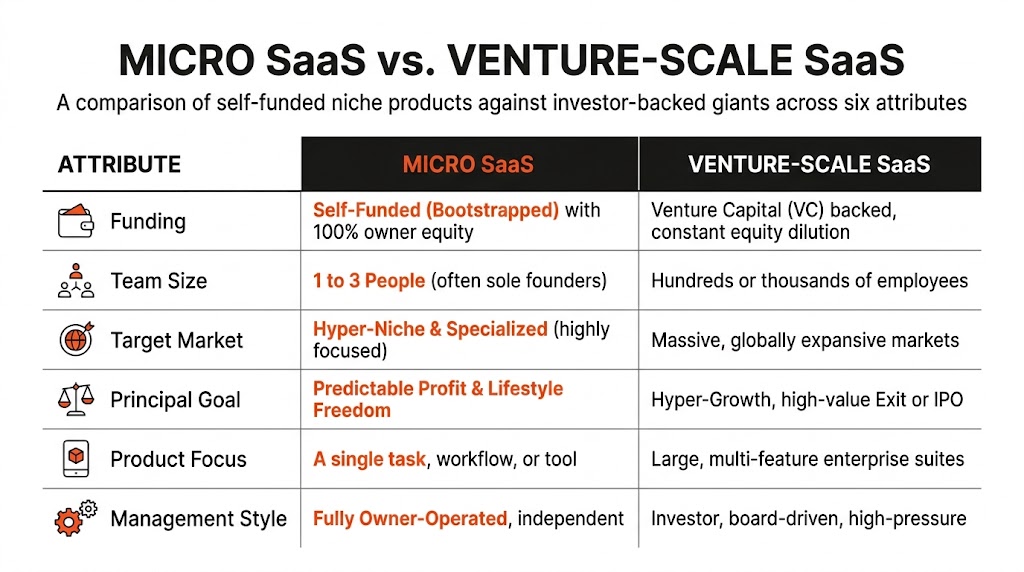
A micro SaaS is a paid software product that solves one problem for one identifiable group, is run by one person or a very small team, and is profitable at a customer count a venture-backed company would consider a rounding error. The constraint is not ambition. It is scope: one job, one buyer, one bill.
The scope test
One sentence has to describe what the product does, who it is for, and what it replaces. If that sentence needs an and, the scope is wrong. Turns a recorded sales call into a filled-in CRM record for recruitment agencies. Helping teams work better with AI is not a product; it is a slogan.
Why an incumbent is a good sign, not a bad one
A category with no existing product usually means no budget line. A category with one expensive, broad incumbent means a budget line exists, and part of it is being spent on features the buyer does not use. Every idea below names that incumbent so the gap can be checked before anything is built.
Where the margin comes from
A micro SaaS earns its margin by refusing work: no custom onboarding, no professional services, no enterprise security questionnaire. The moment a product accepts those, it needs a team, and the economics stop being a one-person business.
How to Validate Any Idea on This List in Two Weeks
The test below is the same for all fifty-two. It costs a domain, a landing page and about twenty hours. It ends with either a signature or a clear no, and the no is worth as much as the yes because it arrives before the build.
Day 1 to 3: find twenty people who have the problem
Not twenty people who find the idea interesting. Twenty who are doing the job badly right now, named, reachable, in one community or one industry list. If twenty cannot be found in three days, the market is too thin and no amount of building fixes that.
Day 4 to 6: ask what they do today and what it costs them
Ask only about the present. What tool, what spreadsheet, how many hours a week, who does it. The answers give the incumbent, the real workflow and the price ceiling. A problem nobody can quantify in hours or money is not yet a problem they will pay to remove.
Day 7 to 9: publish one page with a price on it
One screen of copy, the single job, a number, and a button. The price belongs on the page from the first day: a page without a price measures curiosity, and a page with one measures intent. Omega Solution’s MVP development engagements start after this page exists, not before.
Day 10 to 12: ask for money, not for signups
Take pre-orders, deposits or a paid pilot. An email address costs nothing to give and predicts nothing. Five people paying anything at all, even a discounted annual plan on software nobody has written a line of, is the only signal that survives contact with a build.
Day 13 to 14: write down what would make you stop
Before building, write the number that means abandon: pilots not converted, interviews that found no budget holder, a price nobody would meet. Founders who skip this step do not stop; they add features. Validating a startup idea covers the longer version of this process.
AI and Automation Micro SaaS Ideas
Eight ideas where a general-purpose model already does the hard part and the product is the workflow around it. The gap in this category is rarely intelligence. It is the specific input format, the specific output format, and the one place the result has to land.
1. Call recording to filled-in CRM record, for one industry
The problem: a salesperson finishes a call and spends twelve minutes typing what was said into fields. Who pays: agency and brokerage owners billing per placement. Already serving it: Otter.ai transcribes the call but leaves the fields empty. The test: ask five owners for last month’s call recordings and fill the records by hand before writing any code.
2. Alt text and image captions generated against a brand glossary
The problem: large image libraries ship without alt text, and generic descriptions use the wrong product names. Who pays: ecommerce and publishing content teams. Already serving it: Cloudinary manages the library but does not know the brand’s vocabulary. The test: run one client’s back catalog manually and count the corrections an editor still makes.
3. Recorded screen session to written standard operating procedure
The problem: process documentation is written once and never updated, so the newest hire learns from the person beside them. Who pays: operations leads in companies of twenty to two hundred. Already serving it: Scribe captures the clicks; the prose and the approval loop are still manual. The test: sell three procedures as a service first, then automate the part that repeats.
4. Shared inbox reply drafting for a single regulated trade
The problem: the same forty questions arrive weekly, and the answers must use approved wording. Who pays: clinics, brokers, licensed trades. Already serving it: Front routes the mail without drafting compliant answers. The test: write the forty answers, measure how often they are reused unedited.
5. Prompt library with versions and access control
The problem: a team’s working prompts live in private notes, so quality depends on who is on shift. Who pays: support, marketing and legal teams running models daily. Already serving it: PromptLayer serves engineers more than operators. The test: run one team on a shared document for a fortnight and count the edits.
6. Outbound document redaction before a file leaves the company
The problem: attachments go out with client names, salaries or addresses still in them. Who pays: law, recruitment and accounting practices. Already serving it: Adobe Acrobat redacts a document at a time, by hand. The test: audit one week of a practice’s sent attachments and report what should not have left.
7. Changelog and release notes written from merged pull requests
The problem: customers are never told what shipped, because writing it is nobody’s job. Who pays: product managers at small software companies. Already serving it: Beamer publishes the notes once somebody writes them. The test: write four weeks of notes by hand for one company and see whether anyone asks for the fifth.
8. Voice note to structured field report
The problem: a technician describes a site visit into a phone, and an administrator retypes it into a form. Who pays: field service, inspection and surveying firms. Already serving it: Jotform collects the form, assuming somebody types it. The test: transcribe twenty voice notes manually into the firm’s existing form and time the saving.
Developer and Technical Micro SaaS Ideas
Eight ideas aimed at engineers, who are the easiest market to reach and the hardest to charge. The rule in this category is that the product must save a team money or a deadline, not save an individual engineer an afternoon.
9. Dependency upgrade reports for one framework only
The problem: upgrade guides are generic, and the work of discovering what breaks falls on the team every time. Who pays: agencies maintaining many client sites on one stack. Already serving it: Sentry reports the breakage after release rather than before it. The test: produce the report by hand for three agencies and charge for the third.
10. Staging environment cost shutdowns
The problem: non-production environments run all night and all weekend, and nobody owns the bill. Who pays: engineering managers with a cloud budget they are asked to defend. Already serving it: Datadog shows the spend without turning anything off. The test: calculate one company’s idle hours from its existing billing export.
11. Status page that reads from the tools a team already runs
The problem: incident pages are updated by hand during the one hour nobody has spare. Who pays: software companies with a contractual uptime commitment. Already serving it: Better Stack monitors the endpoint; the customer-facing narrative is still typed. The test: shadow two incidents and write the updates manually.
12. API contract diffing for partners rather than for internal teams
The problem: an API changes, and the integration partner finds out when it breaks. Who pays: companies whose revenue arrives through partner integrations. Already serving it: Postman tests a collection but does not warn a third party. The test: diff one company’s last twelve months of specifications and show what a partner would have missed.
13. Migration dry runs for a single database pair
The problem: a migration is rehearsed once, in production, at night. Who pays: technical leads at companies leaving a legacy system. Already serving it: Retool reads both databases but rehearses nothing. The test: run one rehearsal as a paid engagement and write down every step.
14. Test data generation that respects real foreign keys
The problem: realistic test data is either hand-built or copied from production, which is the thing nobody is allowed to do. Who pays: teams in regulated industries. Already serving it: most teams use a script one person wrote and nobody else understands. The test: generate one team’s hardest table and have their QA lead try to break it.
15. Error grouping for a framework the big tools handle badly
The problem: generic error trackers group thousands of alerts into the wrong buckets for one specific stack. Who pays: teams on that stack, which is a small market that knows it is underserved. Already serving it: Sentry, generically. The test: take one month of a team’s raw logs and regroup them by hand.
16. Internal tool access reviews
The problem: nobody can say who still has access to the admin panel, and the auditor asks every year. Who pays: companies preparing for a security questionnaire. Already serving it: Vanta tracks the policy, not the actual panel. The test: produce one company’s access list manually and count the accounts that should have been closed.
Marketing and SEO Micro SaaS Ideas
Eight ideas in the most crowded category on this list. Crowding is not the problem; breadth is. Every incumbent here is a suite, and a suite leaves gaps that a single-job product fits into. The buyer in this category already pays for software, which makes the question what to stop paying for.
17. Internal link suggestions for one content management system
The problem: internal linking is a manual audit nobody repeats after launch. Who pays: content teams publishing weekly. Already serving it: Ahrefs reports the links that exist, not the ones that should. The test: audit one site of two hundred pages by hand and measure what the recommendations change.
18. Brand mention monitoring inside answer engines
The problem: buyers ask a model instead of a search engine, and brands have no record of what it says about them. Who pays: marketing leads who are being asked this question by their board. Already serving it: Semrush tracks search rankings. The test: run fifty prompts weekly for one brand by hand for a month and report the drift.
19. Landing page copy tests for a single ad platform
The problem: ad copy and landing copy are written by different people and never matched. Who pays: performance marketers spending daily. Already serving it: Hotjar records the behavior without proposing the copy. The test: rewrite three live pages to match their ads and report the change in cost per acquisition.
20. Content refresh queue built from declining pages
The problem: refreshing old content beats writing new content, and nobody has a list. Who pays: content managers with more than a hundred published pages. Already serving it: Surfer SEO optimizes a page once somebody chooses it. The test: build the list manually for one site and have the team work it for six weeks.
21. Newsletter sponsorship inventory and reporting
The problem: a newsletter sells sponsorships in a spreadsheet, invoices by hand and reports by screenshot. Who pays: operators with five thousand subscribers and up. Already serving it: Beehiiv publishes the newsletter; the sponsor relationship sits outside it. The test: run one operator’s next three slots as a service.
22. Review response drafting for multi-location businesses
The problem: every review deserves a reply, and head office cannot write in forty local voices. Who pays: franchise and clinic groups. Already serving it: Sprout Social surfaces the review and leaves the reply blank. The test: write a month of replies for one group and measure the response rate.
23. UTM governance and naming enforcement
The problem: four people invent four naming schemes, and the reporting silently splits. Who pays: anyone whose attribution report has stopped reconciling. Already serving it: Segment collects whatever arrives. The test: audit one company’s last quarter of links and show the split.
24. Competitor pricing page change alerts
The problem: competitors change prices quietly, and nobody notices for a quarter. Who pays: product marketing and pricing owners. Already serving it: nothing single-purpose; it is usually a junior employee with a calendar reminder. The test: watch ten pricing pages manually for six weeks and send a weekly note.
Sales and Customer Operations Micro SaaS Ideas
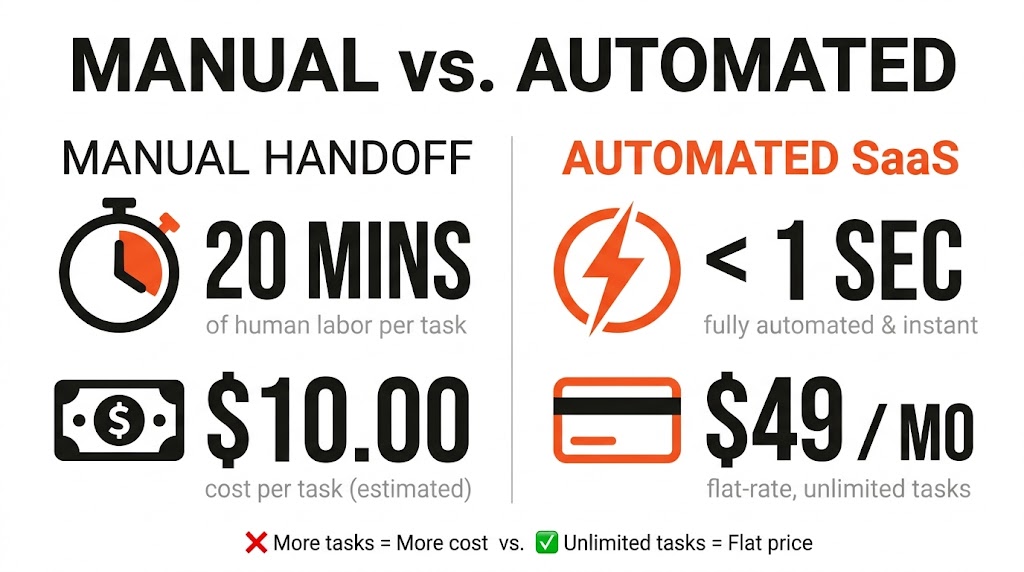
Eight ideas where the buyer has a number to hit, which makes the budget conversation short. The products here all remove a handoff, and a handoff is the easiest thing in a company to put a cost against: count the minutes, multiply by the salary, compare with the subscription.
25. Pre-call briefing documents assembled automatically
The problem: a rep walks into a call without reading anything, because reading everything takes twenty minutes. Who pays: sales managers with a quota and a small team. Already serving it: HubSpot stores the history without assembling the brief. The test: write briefs by hand before ten calls and ask the reps whether they used them.
26. Quote approval routing for one pricing model
The problem: a discount request sits in a direct message for two days. Who pays: revenue operations leads. Already serving it: PandaDoc produces the document after the approval that nobody tracked. The test: route one month of requests through a shared channel with a stated rule.
27. Churn warning from support ticket language
The problem: the signals that a customer is leaving appear in support text weeks before the renewal. Who pays: customer success leads carrying a retention target. Already serving it: Zendesk stores the tickets and reports on response time. The test: read one quarter of closed tickets for accounts that later churned and write down the phrases.
28. Onboarding checklists that a customer can see
The problem: implementation is tracked internally, so the customer never knows whose turn it is. Who pays: companies whose onboarding runs past thirty days. Already serving it: Asana tracks the internal plan only. The test: run three onboardings on a shared document and count the chasing emails saved.
29. Renewal calendar with the contract terms extracted
The problem: notice periods are buried in signed PDFs and auto-renewals land as surprises. Who pays: finance and procurement in companies with fifty or more subscriptions. Already serving it: DocuSign stores the agreement; the dates stay inside it. The test: extract one company’s terms by hand and build the calendar.
30. Territory and routing rules that can be changed without an administrator
The problem: lead routing lives in a configuration only one person understands. Who pays: sales operations at companies splitting a territory. Already serving it: Salesforce handles it with an administrator and a ticket. The test: document one company’s real routing rules and find the cases they do not cover.
31. Reference customer tracking with consent dates
The problem: the same three customers get asked for references until they stop answering. Who pays: enterprise sales teams and the marketing lead who asks on their behalf. Already serving it: a spreadsheet, usually out of date. The test: build the list for one company and record how often each reference was approached last year.
32. Win and loss notes that someone actually reads
The problem: the reason a deal died is recorded in a free-text box and never aggregated. Who pays: sales leaders who are asked why the quarter missed. Already serving it: the CRM field exists and is empty. The test: interview the last twenty closed-lost deals and report the pattern.
Finance, Billing and Compliance Micro SaaS Ideas
Eight ideas in the category with the shortest sales cycle on this list, because the buyer is already late. Every item here removes either a filing risk or a reconciliation that a person does monthly by hand, and both of those carry a date that somebody outside the company set.
33. Usage reconciliation between a metering source and an invoice
The problem: usage-based bills are computed in one system and invoiced in another, and the two drift. Who pays: finance teams at usage-priced software companies. Already serving it: Stripe bills what it is told. The test: reconcile one month by hand and report the variance.
34. Dunning sequences written for one payment processor
The problem: failed payments are retried mechanically, and the customer is never spoken to. Who pays: subscription businesses with involuntary churn they can measure. Already serving it: Chargebee retries; the messaging is generic. The test: write and send the sequence manually for thirty days.
35. Expense policy checks before submission rather than after
The problem: a claim is rejected a week after it is filed, and the whole loop repeats. Who pays: finance managers at companies of fifty and up. Already serving it: Expensify captures receipts and enforces policy late. The test: pre-check one month of claims and count the rejections avoided.
36. Multi-currency invoice matching for small exporters
The problem: payment arrives, the rate has moved, and the invoice no longer matches the bank line. Who pays: owners of small export businesses. Already serving it: Xero records both entries and leaves the match to a bookkeeper. The test: match one quarter by hand for a single client.
37. Contractor compliance document expiry tracking
The problem: insurance certificates and licenses expire silently, and the exposure is discovered during an incident. Who pays: construction, logistics and facilities operators. Already serving it: Deel handles the contract, not the certificates attached to it. The test: audit one operator’s current documents and report what has already lapsed.
38. Evidence collection for a single security framework
The problem: certification evidence is gathered in a panic once a year. Who pays: software companies in their first audit. Already serving it: Drata covers many frameworks broadly and prices for it. The test: collect one company’s evidence for one framework manually and time it.
39. Data retention clocks for one privacy regime
The problem: deletion deadlines are policy statements rather than scheduled jobs. Who pays: operations and legal leads in companies holding consumer data. Already serving it: OneTrust writes the policy; the deletion remains manual. The test: inventory one company’s stores and the age of the oldest record in each.
40. Board and investor reporting assembled from existing sources
The problem: the monthly pack is rebuilt by hand from five tools by the one person who should not be doing it. Who pays: founders and finance leads at funded companies. Already serving it: Metabase charts the data without assembling the pack. The test: build three months of packs as a service.
Vertical and Industry Micro SaaS Ideas
Six ideas aimed at an industry rather than a job. Vertical products are harder to market and much harder to displace, because the buyer’s whole month runs on the workflow the product encodes. Switching costs here are measured in retraining, not in a data export.
41. Shift handover notes for clinical and care settings
The problem: handover happens verbally, and the record written afterwards is thin. Who pays: care home and clinic operators facing inspection. Already serving it: paper, or a general notes tool. The test: run three weeks of handovers on a structured template and have an inspector read the output.
42. Equipment inspection logs with the statutory interval attached
The problem: inspection records exist, but the interval that makes them compliant lives in a manual. Who pays: plant, lift and pressure equipment operators. Already serving it: general maintenance platforms that know nothing about the interval. The test: attach the correct interval to one operator’s asset register by hand.
43. Produce traceability for small wholesalers
The problem: a recall request arrives, and the lot history is spread across invoices. Who pays: wholesalers and processors who have been asked for a one-day retrieval. Already serving it: accounting software that records the sale, not the lot. The test: run one mock recall on last quarter’s records.
44. Studio and class scheduling with instructor pay rules
The problem: scheduling tools book the class and leave the pay calculation in a spreadsheet. Who pays: studio owners with ten or more instructors. Already serving it: Calendly books a slot and knows to pay nothing. The test: calculate one month’s instructor pay from the existing bookings.
45. Freight document packs assembled per shipment
The problem: a shipment needs six documents from four parties, and chasing them is a full-time job. Who pays: freight forwarders and small importers. Already serving it: email. The test: assemble ten packs manually and record the hours per shipment.
46. Grant and tender deadline tracking for one sector
The problem: funding opportunities are published across dozens of portals with different formats and closing rules. Who pays: non-profit and public sector bid teams. Already serving it: a mailing list and a calendar. The test: track one sector for six weeks and send a weekly digest.
Creator, Community and Internal-Tool Micro SaaS Ideas
Six ideas aimed at people who already sell something and need one piece of the operation fixed. The buyer here pays from revenue rather than from a budget, which shortens the decision and lowers the price ceiling. Volume has to make up the difference, so the market needs to be large.
47. Paid community member onboarding and offboarding
The problem: members join, nobody greets them, and they lapse in month two. Who pays: paid community operators. Already serving it: Circle hosts the community without running the lifecycle. The test: onboard thirty members by hand and compare their second-month retention.
48. Course completion nudges tied to actual progress
The problem: course buyers stop at lesson three, and the refund arrives at week four. Who pays: independent course sellers. Already serving it: the course platform sends the same sequence to everyone. The test: send manual nudges to one cohort based on where each person stopped.
49. Digital product license delivery and seat management
The problem: a template or plugin is sold once and shared ten times. Who pays: sellers of digital products with an active audience. Already serving it: Gumroad takes the payment and delivers a file. The test: issue keys manually for one launch and count the reuse attempts.
50. Sponsorship and affiliate disclosure compliance for creators
The problem: disclosure rules differ by platform and country, and a creator finds out when a post is removed. Who pays: creators earning from brand deals. Already serving it: nothing single-purpose. The test: audit one creator’s last fifty posts against the rules of each platform they use.
51. Internal request intake that replaces a direct-message queue
The problem: every request to a small internal team arrives as a message, so nothing can be prioritised or counted. Who pays: heads of small internal functions: IT, design, data. Already serving it: Trello, once somebody copies the message into it. The test: run one team’s intake through a single form for a month and report the volume.
52. Meeting cost and decision log for recurring meetings
The problem: a recurring meeting outlives its reason, and nobody can show what it decided. Who pays: operations leads and chiefs of staff. Already serving it: the calendar, which records attendance and nothing else. The test: log decisions for one company’s ten largest recurring meetings for a month.
What It Costs to Build One of These
A first paid version of any idea on this list is a small build, and the honest way to quote one is as an hour count against named roles. The band published for Omega Solution in March 2026 is $25 to $49 an hour, and its project pages print a headcount and a week count to multiply it against.
The smallest real version, in hours
Two people for six weeks at forty hours is two times six times forty, or 480 hours. At $25 an hour that is $12,000, and at $49 an hour $23,520. That buys one workflow, one integration, authentication, billing and nothing else. It does not buy a second user role, an administrative console or a mobile application.
What Omega Solution’s own shortest deliveries look like
Nsimbi Impact records Time Taken 4 Weeks and a team of four, which is four times four times forty, or 640 hours, for the features of its own page lists, among them Intelligent OCR & Document Scanning and, separately, Automated Loan Decisioning. That page also names a person with a title, Sebastian Mayer, Project Manager, Nsimbi. Iqra TV records time taken as 6 Weeks and a team of three, which is six times three times forty, or 720 hours, for 24/7 live streaming, a video-on-demand library and a Web Admin Panel to control the App. Both pages publish the duration and the team, so both figures can be checked.
The line items a first quote usually leaves out
Payment and tax handling, transactional email deliverability, the administrative console the founder will live in, and the support load after launch. A quote with a total and no hours cannot be tested against any of this. Custom software development and maintenance and support are quoted separately here for that reason.
Four Mistakes First-Time Micro SaaS Founders Make
These four account for most of the products on this list that get built and never sold. None of them is a technical mistake. Each is a decision made early, usually to avoid an uncomfortable conversation, and each is cheap to reverse before a line of code exists.
Mistake 1: Treating a thin wrapper as a product
A single call to a model behind a text box is a demonstration. The product is the input the buyer already has, the output their next step already needs, and the place the result has to land. If a buyer could get the same answer by pasting their text into a chat window, there is nothing to charge for.
Mistake 2: Choosing a market with no budget line
Enthusiasm is not budget. A market where the work is currently done by an unpaid volunteer, or by nobody, has no money to redirect. The interview question that settles it is not “would you use this”, it is “who signs for the thing you use today”.
Mistake 3: Launching without a price
A free beta measures curiosity and teaches nothing about willingness to pay. Pricing late also means the product gets built for the wrong buyer, because the people who try something free are not the people who approve an invoice.
Mistake 4: Accepting the first enterprise request
The first large customer asks for single sign-on, a security review, a custom contract and a quarterly call. Each is reasonable, and each adds permanent work. A one-person product that says yes to all four is no longer a one-person product, and the revenue rarely covers the change.
Frequently Asked Questions
What counts as a micro SaaS rather than a startup?
Scope and staffing, not revenue. A micro SaaS solves one job for one identifiable buyer and is run by one person or a very small team, with no professional services attached. A product that needs custom onboarding, an enterprise security review or a sales team has left the category, whatever it earns.
How much does it cost to build a micro SaaS?
The smallest real version is about 480 hours, which is two people for six weeks at forty hours each. At the $25 to $49 band published for Omega Solution in March 2026, that comes to $12,000 and $23,520, covering one workflow, one integration, authentication and billing. A second user role or a mobile application is a separate quote.
Do I need to avoid ideas that already have a competitor?
No. An existing competitor proves a budget line exists, which is the hardest thing to establish. Every idea on this list names the product already serving that market, because the opportunity is usually a broad, expensive incumbent that a buyer uses one tenth of. A category with no incumbent often has no buyer.
How do I validate a micro SaaS idea quickly?
Find twenty people doing the job badly, ask only what they do today and what it costs them, publish one page with a real price on it, then ask for money rather than signups. Five paying pilots beat five hundred email addresses. Write down in advance the result that means stop.
Which of these categories is easiest to sell into?
Finance, billing and compliance, because the buyer is usually already late and the cost of the status quo is a number they can state. Developer tools reach an audience most easily and convert worst, because the individual engineer who loves the product is rarely the person who approves the invoice.
Can one person really run a software product alone?
Yes, if the product refuses work. No custom onboarding, no services, no bespoke contracts. The constraint is not the code, it is every commitment that only a human can honour: implementation calls, security questionnaires, quarterly reviews. Products that accept those need a team within a year.
Should I build with artificial intelligence features at all?
Only where the model is not the product. The useful pattern is a specific input the buyer already produces, a specific output their next step already consumes, and a destination the result lands in. A text box in front of a general-purpose model is a feature a buyer can replicate for free.
Where do I find the twenty people to interview?
In one place rather than across the internet: an industry association list, a trade group, a single professional community, a conference attendee list. If twenty cannot be found and reached inside three days, that is information about the market rather than about the search, and it arrives cheaply.
What to Do With the Idea You Picked
Pick one idea, run the fourteen days, and let the stopping rule do its job. Fifty-two ideas, each naming the product already serving that market and the test that settles it, are worth exactly as much as the one that survives being asked for money.
When an idea does survive, the next step is a scoped first version: MVP development for the smallest paid build, or IT consultation to price the hours against named roles before anything is committed to.



 Aug 26, 2025


 Dhaka, Bangladesh


